
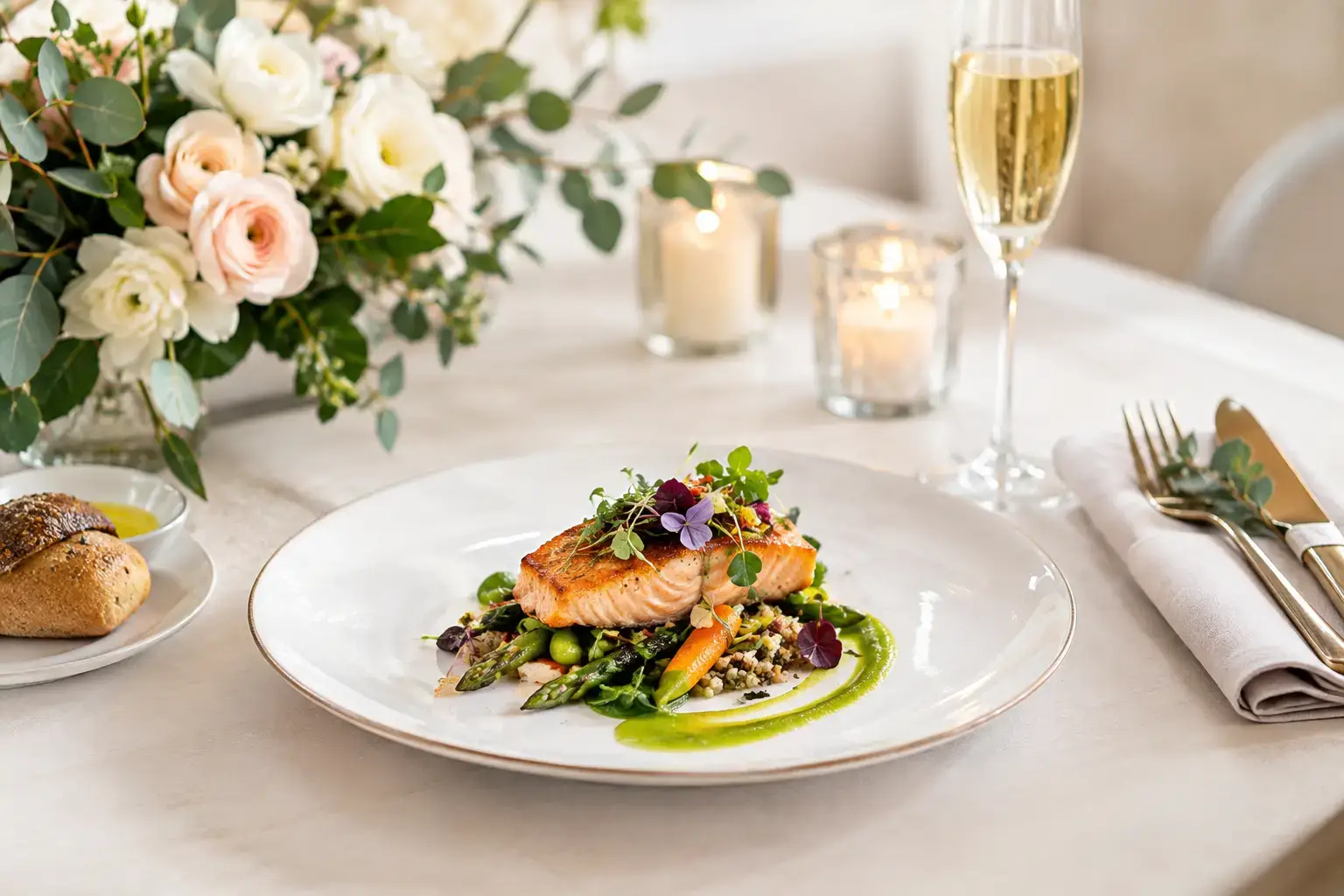
A wedding menu is no longer a single meal placed between the ceremony and the dancing. It is one of the clearest expressions of how a celebration feels: generous, personal, considered, and easy for guests to enjoy. The most compelling wedding menu trends 2026 are not about chasing novelty for its own sake. They are about pairing fine-dining quality with service that suits the pace, setting, and guest list of the day.
For couples planning an elevated Palm Beach or Broward County wedding, the question is less “What is everyone serving?” and more “What will make our guests feel genuinely cared for?” That distinction shapes everything from cocktail hour to late-night bites.
Wedding Menu Trends 2026: Personal, Polished, and Guest-Centered
The strongest menus this year are tailored rather than overly expansive. Couples are choosing a few memorable culinary moments, executing them beautifully, instead of offering a long list of options that can dilute the experience. A composed passed hors d’oeuvre, a beautifully presented station, or a plated entrée with a seasonal point of view can carry more impact than an elaborate menu without a clear rhythm.
This is especially true at estate and waterfront weddings, where food must work alongside the venue, weather, timeline, and service environment. A menu for a warm outdoor reception should feel fresh and composed, not overly heavy. A formal ballroom evening can support more traditional pacing and richer sauces. The menu should belong to the event, not compete with it.
Restaurant-quality ingredients with a sense of place
Guests increasingly recognize the difference between food prepared for volume and food approached with chef-led discipline. Seasonal produce, responsibly sourced seafood, carefully selected proteins, and sauces finished close to service are becoming central to luxury wedding menus.
That does not require every dish to be unfamiliar. In fact, familiar ingredients often perform best when they are treated with precision. A local fish entrée may be paired with bright citrus, market vegetables, and a refined beurre blanc. A filet presentation can feel current with a thoughtful accompaniment rather than a predictable plate of steak and potatoes. The goal is recognition with a polished edge.
Chef Deanna Corso’s nearly 20 years at The Boca Raton Resort reinforces a useful standard for wedding planning: luxury is often felt in the details guests do not have to think about. Food arrives at the right temperature. Courses move at the right pace. Presentation remains composed from the first table to the last.
Interactive Service, Done with Restraint
Interactive dining remains popular, but the most refined version is not a crowded collection of stations. It is one or two experiences that invite conversation while maintaining graceful service.
A chef-attended crudo or seafood presentation can be ideal for a coastal cocktail hour. A carved entrée station may suit a garden reception when paired with a few carefully chosen accompaniments. For an Italian-inspired celebration, a finished-to-order pasta course can create warmth and theater without disrupting the evening.
The trade-off is logistics. Stations require space, power when cooking is involved, appropriate staffing, and enough time in the event flow for guests to enjoy them. At a private home, placement matters just as much as the food itself. A station positioned too close to the bar can create congestion; one tucked too far from the gathering can be overlooked. An experienced caterer and planner will map service around natural guest movement rather than adding features simply because they are fashionable.
Cocktail hour as a true culinary chapter
Cocktail hour is becoming more substantial and intentional. Rather than treating it as a brief holding period before dinner, couples are using it to establish the evening’s culinary personality. Passed bites may include a balance of seafood, vegetarian options, and more indulgent selections, accompanied by a signature cocktail or a curated zero-proof offering.
This approach is particularly helpful when photography, a room reveal, or a sunset ceremony extends the gap before dinner. Guests stay comfortable and engaged, and the reception begins with hospitality rather than hunger. The important consideration is portioning. A generous cocktail hour should complement dinner, not leave guests too full to appreciate the meal that follows.
Dietary Inclusion Without a Separate Experience
A thoughtful wedding menu in 2026 accounts for dietary needs from the beginning. Vegetarian, vegan, gluten-conscious, dairy-free, and allergy-aware guests should receive food that feels intentionally designed, not like an afterthought delivered in a different style from the rest of the meal.
The best strategy is often to build naturally inclusive elements into the menu. A vegetable-forward first course, a composed salad with a satisfying texture, or a plant-forward entrée designed with the same visual care as the primary selections helps every guest feel part of the occasion.
Couples should still collect dietary information with RSVPs and share it with their caterer well before final counts. Severe allergies need a direct conversation, particularly at events with buffets or active stations where cross-contact may be a concern. Clarity early in the planning process gives the culinary and service teams room to prepare properly.
The return of composed plated dinners
Family-style and station-forward receptions remain excellent choices for the right event, but plated dinners are enjoying renewed interest among couples who want an elegant, calm, and distinctly formal experience. A well-run plated meal creates a welcome pause after a lively cocktail hour. It gives guests time to settle into conversation while the room takes on a more polished cadence.
A multi-course format can be especially effective when the venue and schedule support it. The first course establishes the table, the entrée becomes the centerpiece, and dessert offers a graceful transition into dancing. It also allows for more exacting presentation and portion control.
That said, plated service is not automatically the most luxurious choice. For a relaxed outdoor wedding, a refined buffet or family-style dinner may feel more natural and generous. The deciding factor is how guests will experience the format, not the perceived formality of the word “plated.”
Late-Night Food With a Point of View
Late-night bites are staying on the menu, but couples are moving beyond generic snack tables. The most memorable options connect back to the wedding’s overall style or offer a playful contrast after a formal dinner. Think miniature Cuban sandwiches, elevated chicken and waffles, crisp truffle fries served in individual cones, or warm cookies paired with chilled milk shots.
Timing matters as much as selection. Late-night food generally works best once dancing is underway and guests have had time to enjoy dessert. It should be easy to eat while standing and should not require a second full meal setup. A small, well-timed offering is usually more appreciated than an oversized spread that appears too early.
How to Build a Menu That Will Still Feel Right on Your Wedding Day
Begin with the guest experience rather than a list of favorite dishes. Consider the ceremony time, the season, whether guests will be outdoors, the length of cocktail hour, and the tone you want at dinner. Then decide where to place your culinary emphasis. It may be a remarkable seafood display, a plated entrée service, a celebratory dessert presentation, or a late-night moment guests will talk about on the ride home.
Be realistic about venue conditions. A private estate may offer beautiful views but limited kitchen access. A waterfront setting may need a plan for wind, humidity, and longer service routes. Rental equipment, staffing levels, and kitchen staging have a direct effect on the quality guests receive. These are planning details, but they are also hospitality details.
Finally, taste with intention. When reviewing a proposed menu, ask how it will be prepared and served at your venue, not only how it tastes in a tasting setting. Ask what can be finished on site, how dietary meals will be handled, and how the service team will keep dinner moving. Those answers reveal the care behind the menu.
A wedding meal should feel effortless to the people enjoying it, even though it is carefully orchestrated behind the scenes. If you are shaping a menu for an upcoming celebration, Simply Foods can help you weigh the culinary possibilities against the realities of your venue, timeline, and guest experience.